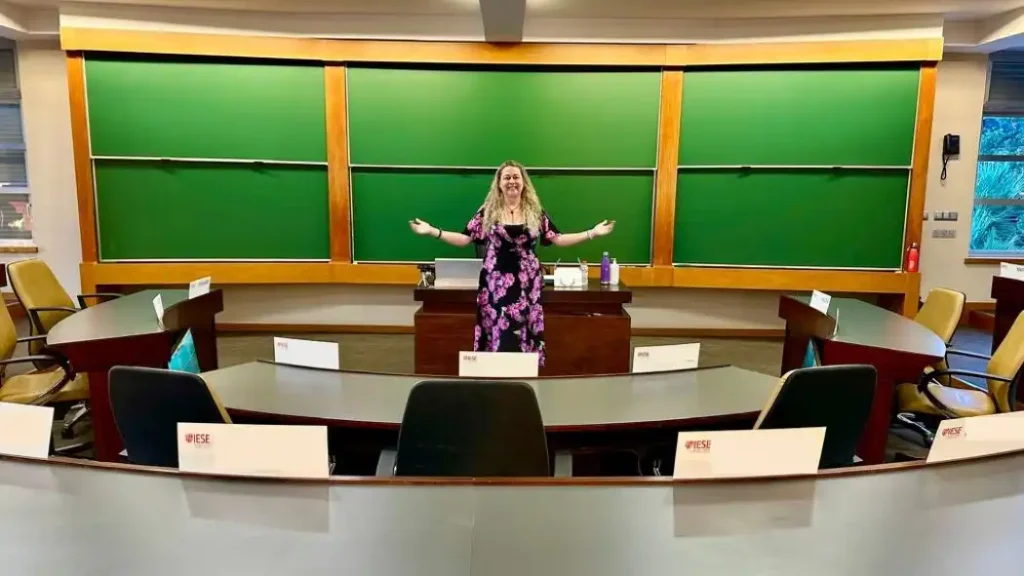
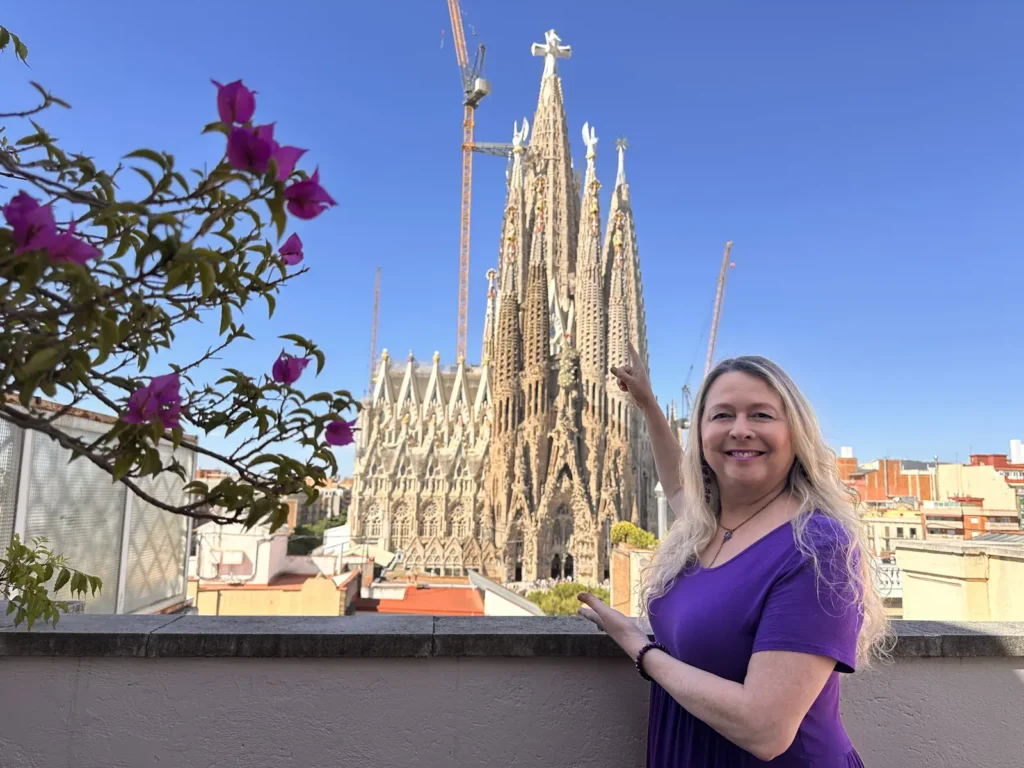
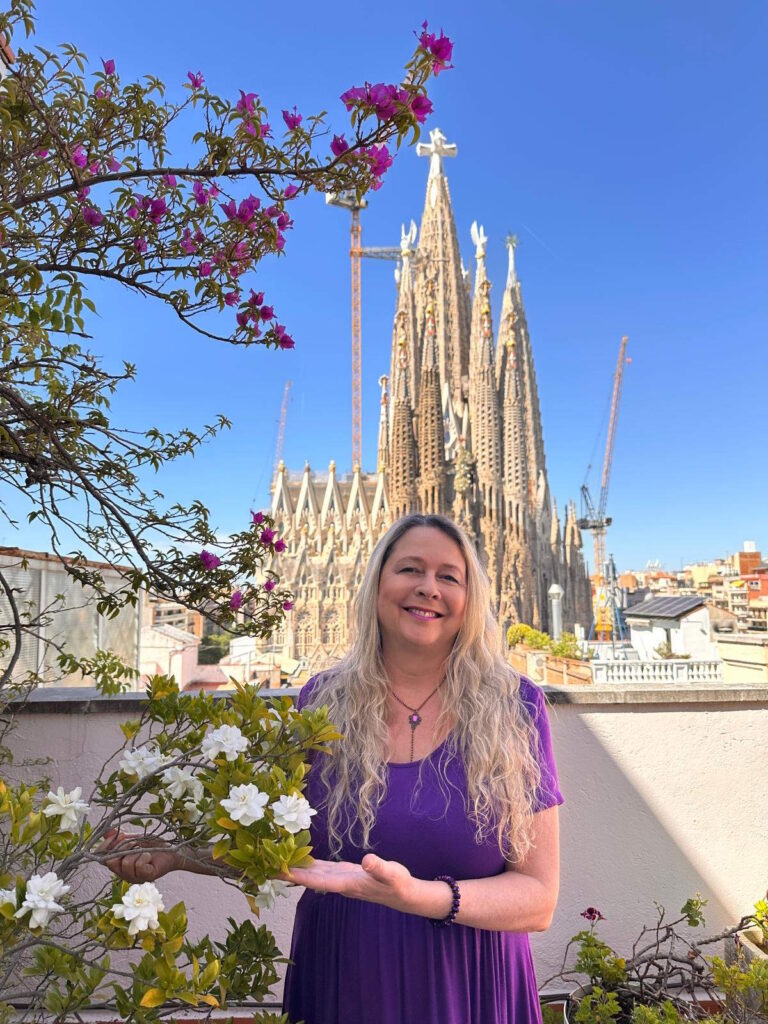
On June 10, 2026, Pope Leo XIV will celebrate a Solemn Mass at the Basílica de la Sagrada Família and preside over the blessing and inauguration of the newly completed Tower of Jesus Christ, the central tower of the basilica. I’ll be watching from my terrace, with its extraordinary view of an awe-inspiring monument I’ve watched change year after year since March 2011.
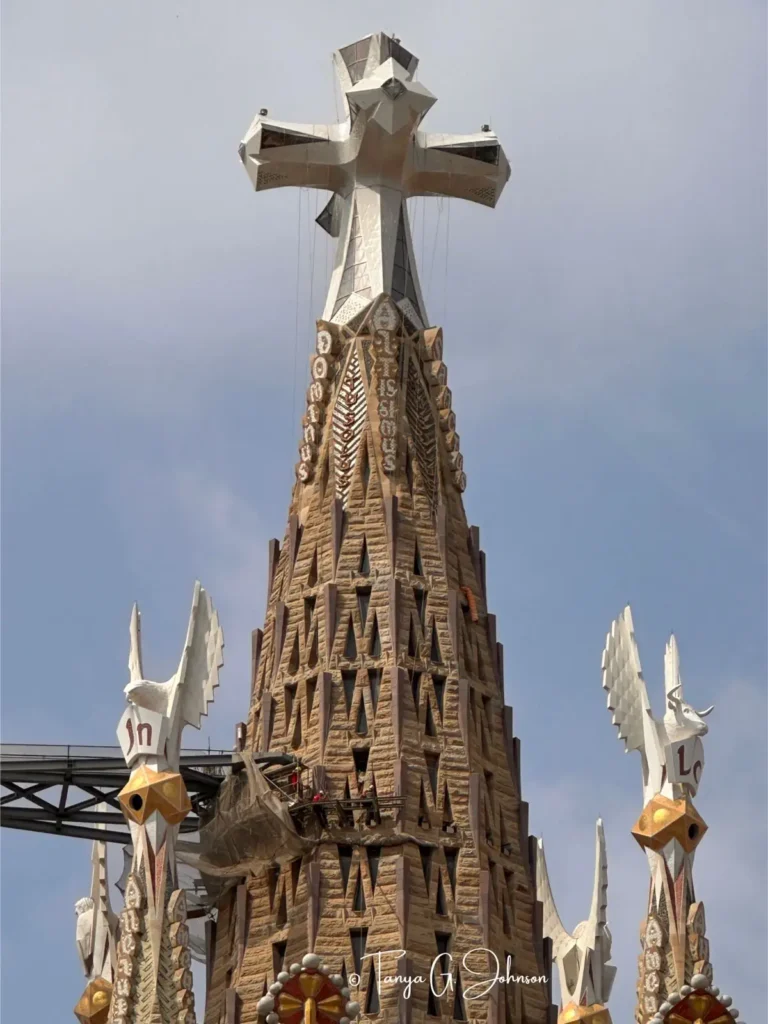
But my relationship with the Sagrada Família goes back much further. I first saw it in 1989, when the centre was still open to the sky and the eight original towers stood around an unfinished space. More to come on that.
Since March 2011, that relationship has become part of my everyday life. Living directly opposite Gaudí’s unfinished masterpiece for more than fifteen years has given me something I didn’t expect: a daily lesson in what powerful communication requires.
The Sagrada Família and leadership communication: What I’ve learned from this view
I didn’t come all the way from California to Barcelona to study architecture, though I was already fascinated by Gaudí. Years later, what I found across the street slowly became one of my most enduring references for the work I do as a communication coach with leaders, professionals, and teams.
Because the Sagrada Família isn’t just a building. It is a living message about vision, patience, structure, collaboration, and shared purpose. It has been under construction for over 140 years, reaching millions of people through every stage of a process that is still unfolding.
That long process is one of the reasons I keep coming back to it through the lens of communication.
Five communication principles written in stone
1. Vision needs structure
Gaudí had an extraordinary vision. That vision needed plans, structure, collaboration, craft, patience, and multiple generations of people who understood it well enough to carry it forward after he was gone.
A powerful idea works the same way. Without clear architecture, even a brilliant message can become difficult to follow. People need to understand it, feel its importance, and remember what it means.
A message, like a building, needs a structure capable of carrying meaning.
2. Presence is built over time
From my terrace, I’ve watched each of the six central towers rise slowly above the roofline: Matthew, Mark, Luke, John, Mary, and now the Tower of Jesus Christ. Each one has taken shape through years of planning and patient work.
Executive presence develops in the same way. It grows through self-awareness, intentional practice, clarity of message, and consistency over time. By the time someone stands in front of an audience, the presence people feel is the result of everything that has been built beforehand.
Presence grows from within the structure.
3. Every detail communicates
In the Sagrada Família, every detail carries intention: the light through the stained glass, the height of the nave, the texture of the stone, and the symbolic figures on every façade. Each element contributes to the message.
In leadership, the same principle applies. Your voice, your pace, your eye contact, the examples you choose, and the words you leave out all communicate. Silence communicates too.
When leaders become aware of this, the quality of their communication changes entirely.
4. Perspective changes what people hear
I’ve stood in the same spot on my terrace for fifteen years, and what I see has never been exactly the same twice. The light shifts. The weather changes. The towers grow. The view evolves. And as the observer, I am never in exactly the same mood when I look at it.
Your audience brings their own vantage point to everything you say. The same message can be understood differently depending on where people are standing professionally, culturally, or emotionally. Effective communication starts with recognising that perspective and adapting to it in the moment.
The same message can be received differently depending on where the audience is standing.
5. Visibility begins before perfection
One of the first things I noticed when I moved in was this: the Sagrada Família was already one of the most visited and admired buildings in the world, and it was nowhere near complete.
I’ve worked with many leaders, executives, and professionals who wait too long before speaking up, publishing, presenting, or making themselves visible. They wait for the right moment, the right preparation, the perfect message.
Some messages begin to matter long before they are finished. The Sagrada Família has been showing us that for more than a century.
Visibility begins when the message is strong enough to be seen.
This year feels different
2026 is the centenary of Antoni Gaudí’s death. On June 10, Pope Leo XIV will celebrate Mass at the Basilica of the Sagrada Família and preside over the blessing and inauguration of the newly completed Tower of Jesus Christ, the central tower that will crown the skyline at 172.5 metres.
From my terrace, I expect to see part of that moment directly. But in some ways, the change has already begun. When the cross went up at the top of the tower, something changed for me. The basilica is still not officially complete, but the energy it radiates now is completely different. The message is closer to standing on its own.
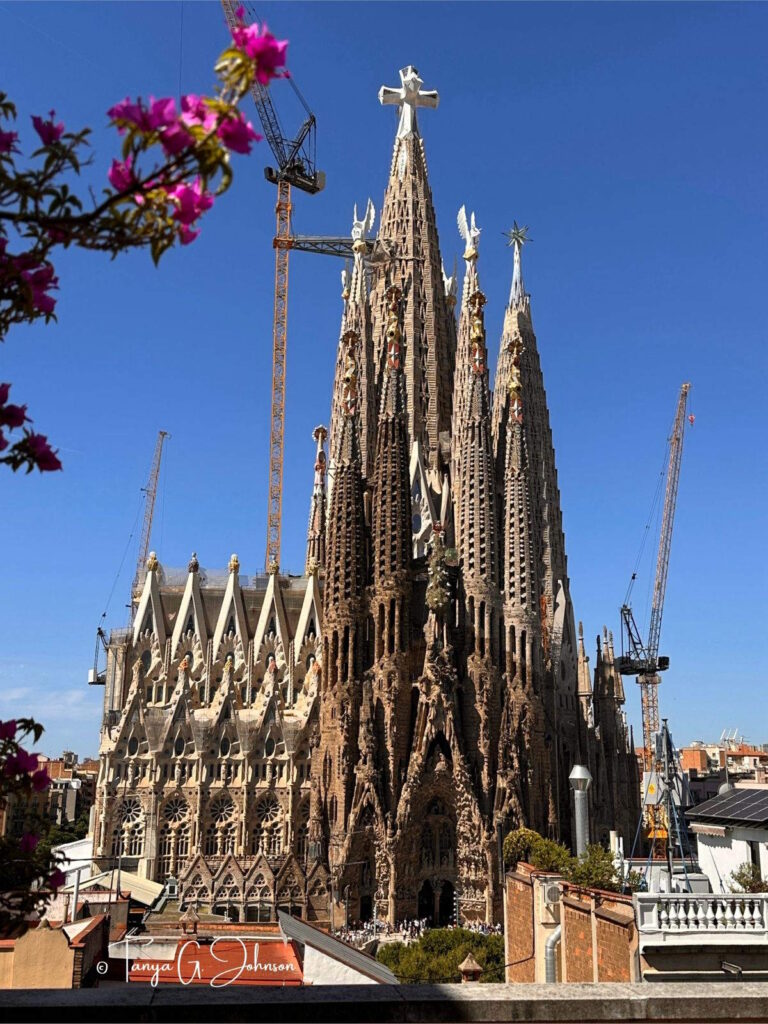
One of my earliest memories here is sleeping on a mattress on the floor and watching the moon pass behind the original towers. That was in 2010. The view has changed entirely since then, and although my own feelings about it have evolved too, one thing stays the same: something is being completed that began long before any of us arrived.
There is something quietly powerful about witnessing a vision reach its culmination. It really does make you think about your own.
What Gaudi’s work has to do with your communication
If you’re a leader, a professional in an international context, or someone who communicates in a second language, you are already working with complexity. You are navigating different cultures, different expectations, and different ways of listening and responding.
What Gaudí understood is that complexity, handled with intention, becomes clarity. Detail, applied with purpose, becomes meaning. A message built carefully, layer by layer, can outlast its creator.
That is what leadership communication can be, at its best.
This week in Barcelona: when the moment becomes the message
As the city prepares for Pope Leo XIV’s visit and the blessing of the Tower of Jesus Christ, Barcelona is living one of its most visible moments in years. From a communication standpoint, an event like this is a masterclass in how meaning is built long before anyone speaks.
Behind every public moment of this scale there is invisible preparation: logistics, coordination, timing, and countless decisions the audience never sees but always feels. The same is true in professional communication. What you do before you walk into a presentation, a panel, or a high-stakes meeting shapes everything the audience perceives once you begin.
There is also a detail that, in a city like Barcelona, is never neutral: the choice of language. Choosing one language over another communicates recognition, closeness, or distance before the first sentence is even spoken. It is something I see constantly when working with professionals who communicate across bilingual and international contexts, where language carries not only information but intention.
Sometimes the moment itself becomes the message, long before a single word is said.
If that is what you are working towards, whether through executive presence, public speaking, message clarity, or communication across languages and cultures, I would be happy to explore it with you.