What the illuminated cross of the Sagrada Família reveals about visibility, presence, feeling, and how messages are received
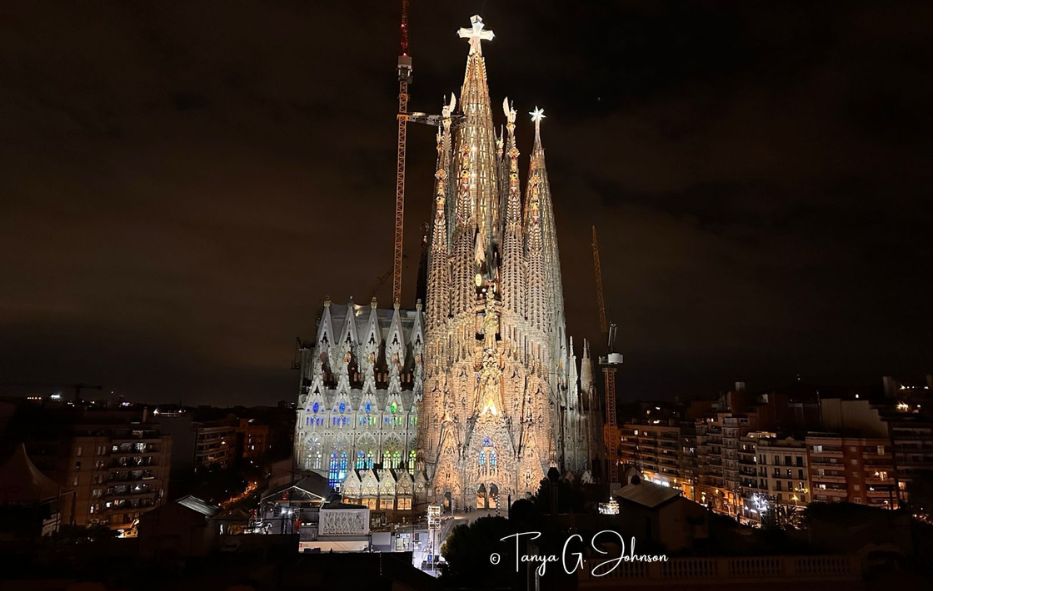
On the night of June 10, I stood on my terrace and watched the cross of the Tower of Jesus Christ light up above the Sagrada Família.
I have looked at that same view of the basilica for more than fifteen years. I thought I knew its rhythms: the cranes, the scaffolding, the changing skyline, the slow movement of construction.
This time, something was different. The view had changed, and so had the feeling it transmitted.
The cross had already been in place for months. I had watched the silhouette change before, but when it was illuminated during the inauguration on June 10, the whole monument transmitted something new.
The light changed the view. The view changed the feeling. And the feeling changed the way the message was received.
In an earlier article, I wrote about what the Sagrada Família teaches about communication: vision, structure, patience, detail, and the long discipline of building a message over time.
This time, I want to explore something more specific and more personal: what happens when a message that has been taking shape for years is suddenly seen, felt, and received in a new way.
A view in constant motion
Living directly opposite the Sagrada Família means living with a view that changes constantly. Morning light, midday sun, sunset, rain, storms, lightning, and one unforgettable rainbow covering the basilica like a dome all alter what the stone transmits in those moments. The cranes move. The scaffolding rises and shifts from one part of the basilica to another, and now, at least for a time, has disappeared. Yet Gaudí’s masterpiece is still in progress, and the skyline of my neighborhood, and of Barcelona itself, keeps redrawing itself year after year.
The basilica communicates through that unfinished state. Its cranes and scaffolding are part of the message: visible signs of commitment, continuity, and work still in progress. Anyone who looks up at it understands that something long, serious, and extraordinary is still being built.
A few hours before the official ceremony, I shared this short moment from my terrace. The cameras, cables, waiting, preparation, view, and silence were already communicating before the event began.
The silhouette changed first
Over the past two years, I watched the pieces of the cross being prepared, lifted, and placed one by one. When the final upper section was set in place on February 20, 2026, the silhouette changed.
And with that change, the whole monument transmitted something different.
It felt taller, calmer, more solemn, and more protective. I looked upward differently. The basilica was still unfinished, still surrounded by cranes and scaffolding, still part of a construction process that continues. But the cross gave the whole structure a new vertical force.
A new part of the message became visible.
Then the light changed the experience
The cross had already been in place for months. Many thousands of people had seen it since the final piece went up in February: neighbors, visitors, tourists, people passing through the streets around the basilica.
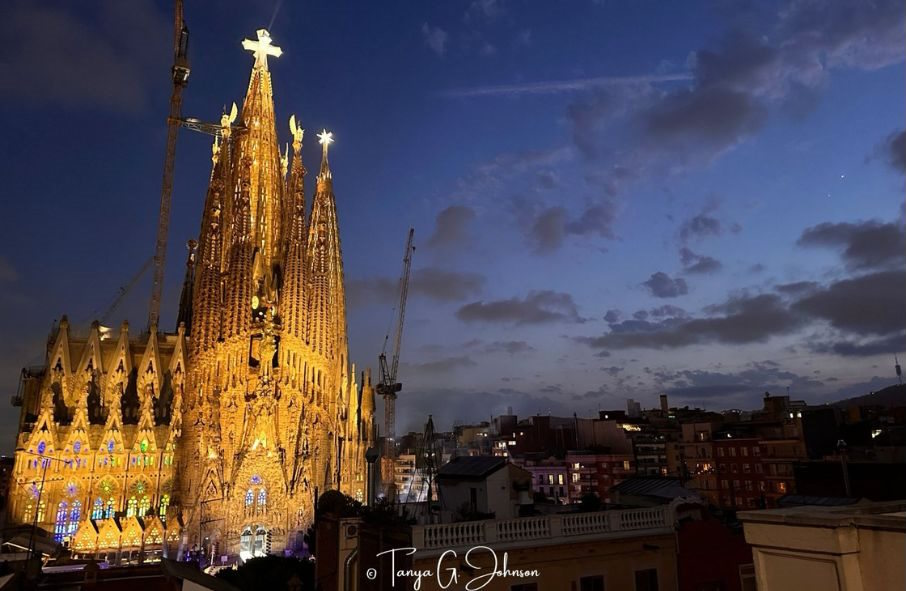
That night, when it was officially illuminated for the first time above the city, it transmitted something more intense, even more beautiful and majestic.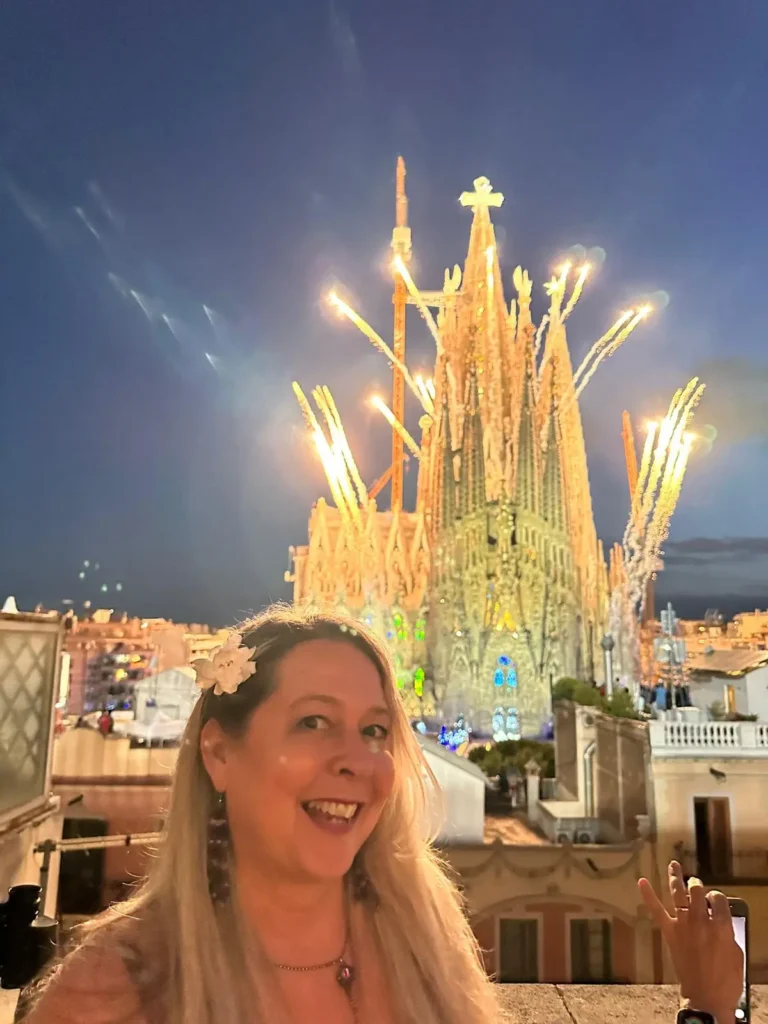
The light revealed the meaning that had already been there, waiting to be seen and felt.
What had already been there suddenly became visible in a new way: higher, brighter, more solemn, more alive. The cross became part of a shared public moment, watched from terraces, streets, balconies, screens, and through news broadcasts around the world, far beyond Barcelona.
People reacted as if they were seeing it for the first time. In a sense, they were. They were feeling what it transmitted.
That is where communication becomes powerful. A message can exist for a long time before people truly receive it. Sometimes the right moment, the right light, the right framing, or the right presence allows people to feel what was already there.
Messages are received as experiences
That is also what happens in leadership communication, public speaking, and executive presence.
A message is shaped by content, structure, and preparation. Those elements matter. They give the message strength, direction, and internal architecture.
The moment of communication is where people experience the message. They hear the voice, they feel the rhythm, and they notice the pauses. They respond to the framing, the presence, the energy, the directness, and the final image they are left with.
This is why a presentation can be well prepared and still fail to move people. It is also why one clear pause, one sentence spoken directly to the audience, one stronger opening, or one more intentional closing can change how the whole message is received.
The message is built before the moment, yet it is received in the moment.
The audience completes the communication
People receive messages in many different ways.
Their attention, mood, expectations, questions, memories, and associations all affect what they hear and what they take away. The space, the timing, the atmosphere, and even the light can influence what they notice, what they understand, and what they remember.
That is why communication is about more than transmission. It is also about reception.
Communication is completed in what people see, feel, understand, and carry away.
The message is still evolving
The Sagrada Família is still in motion. The cranes are still moving. The message is still evolving, as it has been for more than a century.
What changed on June 10 was how that message was received: locally, publicly, and around the world.
That, to me, is the deeper lesson. The final image of a message is rarely a conclusion. Sometimes it opens a new way of understanding what has been there all along.
Your message may already be true, carefully built, and ready to be seen. The question is whether the people you need to reach can feel it yet.
If you are preparing a message that deserves to be seen and felt, such as a keynote, a leadership transition, or a high-stakes presentation, let’s start a conversation.